

Earl Grey Madeleines
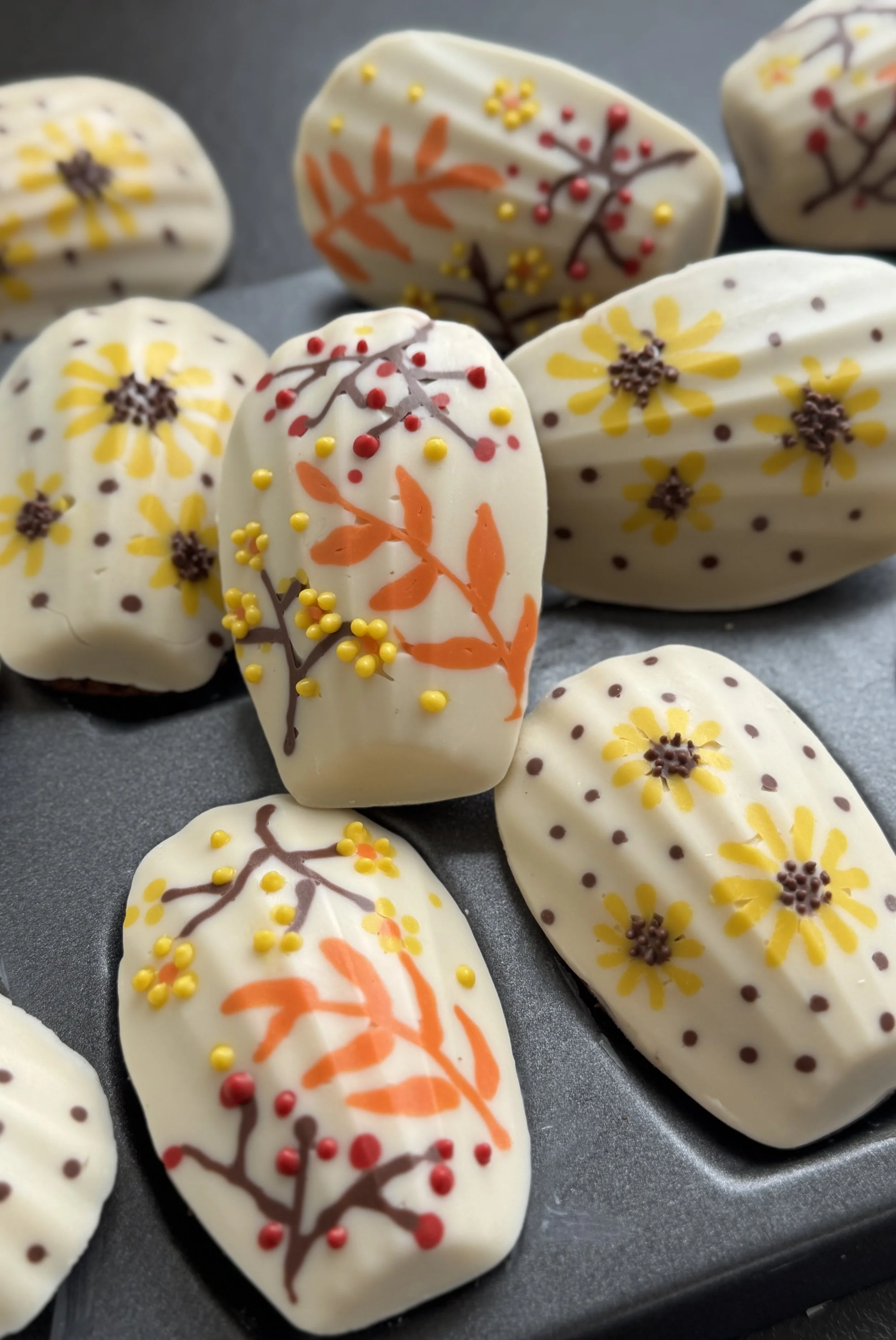
Soft, buttery and delicately fragrant, these Earl Grey Madeleines are a lovely twist on the classic French madeleine. Browned butter gives them a rich, nutty flavour, while honey adds a gentle sweetness and Earl Grey tea brings its distinctive citrusy bergamot aroma.
Perfect with a cup of tea and even better eaten fresh from the oven!
Makes: approximately 18–20 madeleines
Chilling Time: minimum 3 hours, preferably overnight
Ingredients
Earl Grey Madeleines
120g (½ cup) unsalted butter, to make approximately 96g browned butter
120g eggs, approximately 2 large eggs, without shells
65g (⅓ cup) caster sugar
55g (2½ tbsp) honey
120g (1 cup) cake flour
3g (¾ tsp) baking powder
6g Earl Grey tea leaves, approximately 3 tea bags
For Preparing the Pan
Softened unsalted butter, for greasing
Cake flour, for dusting
Method
1. Make the Browned Butter
Place the butter in a small saucepan over medium heat and allow it to melt.
Continue cooking, gently swirling the pan occasionally. The butter will begin to foam and the milk solids will gradually turn golden brown.
Once you can see small golden brown specks at the bottom of the pan and the butter has a lovely nutty aroma, immediately remove it from the heat.
Pour the browned butter into a heatproof bowl to stop it from cooking further.
You should have approximately 96g browned butter after cooking. Allow it to cool until lukewarm before using.
2. Prepare the Earl Grey Tea
Cut open the Earl Grey tea bags and measure out 6g of tea leaves.
If the tea leaves are particularly coarse, crush or grind them slightly so they incorporate more evenly into the madeleine batter.
Set aside.
3. Make the Madeleine Batter
Add the eggs, caster sugar and honey to a large mixing bowl.
Whisk together until smooth, slightly pale and well combined. There is no need to whip the mixture until very thick or fluffy.
In a separate bowl, sift together the cake flour and baking powder.
Gradually add the dry ingredients to the egg mixture and gently whisk or fold until just combined and no pockets of flour remain.
Add the Earl Grey tea leaves and mix until evenly distributed throughout the batter.
4. Add the Browned Butter
Gradually pour the cooled browned butter into the batter while gently mixing.
Continue mixing just until all the butter has been incorporated and the batter is smooth and glossy. Avoid overmixing.
Cover the bowl and refrigerate the batter for at least 3 hours, or preferably overnight.
Chilling the batter is an important step as the contrast between the cold batter and the hot oven helps create the characteristic madeleine hump.
5. Prepare the Madeleine Pan
Generously brush the madeleine pan with softened butter, making sure to get into all the grooves.
Lightly dust with cake flour, then turn the pan over and tap away any excess.
Place the prepared pan in the refrigerator to chill until you are ready to bake.
6. Fill the Madeleine Moulds
When you are ready to bake, preheat the oven to 220°C / 425°F.
Remove the chilled batter from the refrigerator.
Spoon or pipe the cold batter into the prepared madeleine cavities, filling each one approximately ¾ full.
There is no need to spread or flatten the batter as it will naturally spread while baking.
7. Bake the Madeleines
Place the chilled madeleine pan into the hot oven and bake at 220°C / 425°F for 3 minutes.
After 3 minutes, switch the oven off completely, leaving the madeleines inside with the oven door closed for a further 7–8 minutes.
Check the madeleines. They should have risen with their characteristic hump and be beginning to turn golden around the edges.
If they are fully baked and spring back lightly when touched, remove them from the oven.
If they need a little more colour or baking, turn the oven back on to 160°C / 320°F and bake for a further 2–3 minutes.
Every oven is slightly different, so keep an eye on them towards the end. Avoid overbaking as this can make the madeleines dry rather than beautifully soft and buttery.
Allow the madeleines to sit in the pan for 1–2 minutes, then gently remove and transfer them to a wire rack.
Serve slightly warm or leave to cool completely.
Winnie’s Tips
Weigh the browned butter: The butter loses water as it cooks, so 120g of butter will reduce to approximately 96g once browned. For the most consistent results, weigh the browned butter before adding it to the batter.
Watch your butter carefully: Browned butter can go from golden and nutty to burnt very quickly. As soon as you see golden brown specks and smell that lovely nutty aroma, take it off the heat.
Use 6g Earl Grey tea: Tea bags vary in size between brands, so weighing the tea leaves is more accurate than relying on the number of bags. For reference, I used approximately 3 tea bags.
Don’t skip the chilling time: Chill the batter for at least 3 hours, or preferably overnight. Keeping both the batter and prepared pan cold helps encourage that signature madeleine hump.
Don’t spread the batter: Simply spoon or pipe the cold batter into the moulds and let the heat of the oven do the work.
Keep an eye on the final bake: Ovens vary, so your madeleines may not need the final 2–3 minutes at 160°C. Once they are golden around the edges and spring back when lightly touched, they are ready.
Best eaten fresh: Madeleines are at their best on the day they are baked, with lightly golden edges and a soft, buttery centre. Store leftovers in an airtight container at room temperature for up to 2 days.